Efficient inference for multimodal LLMs in an industry project with MediaTek: visual token pruning and KV cache optimization. I focus on multi-view MLLMs for autonomous driving, where every extra camera adds visual tokens and inference cost.
Institut de Robòtica i Informàtica Industrial (IRI), CSIC-UPC
Research Collaborator
Sep 2026 – now, Barcelona
Extending the dataset of “Urban Risk-Aware Navigation via VQA-Based Event Maps for People with Low Vision” (major revision at IEEE T-ITS). I collect pedestrian sequences, annotate them by risk category, and run the VQA models benchmarked in the paper (ViLT, LLaVA, InstructBLIP, Qwen-VL) on the new data.
Efficient inference for multimodal LLMs in an industry project with MediaTek: visual token pruning and KV cache optimization, with a focus on multi-view MLLMs for autonomous driving.
Edge LLM digital avatar on NVIDIA Jetson AGX ThorITRI Blue Ocean Innovation Award
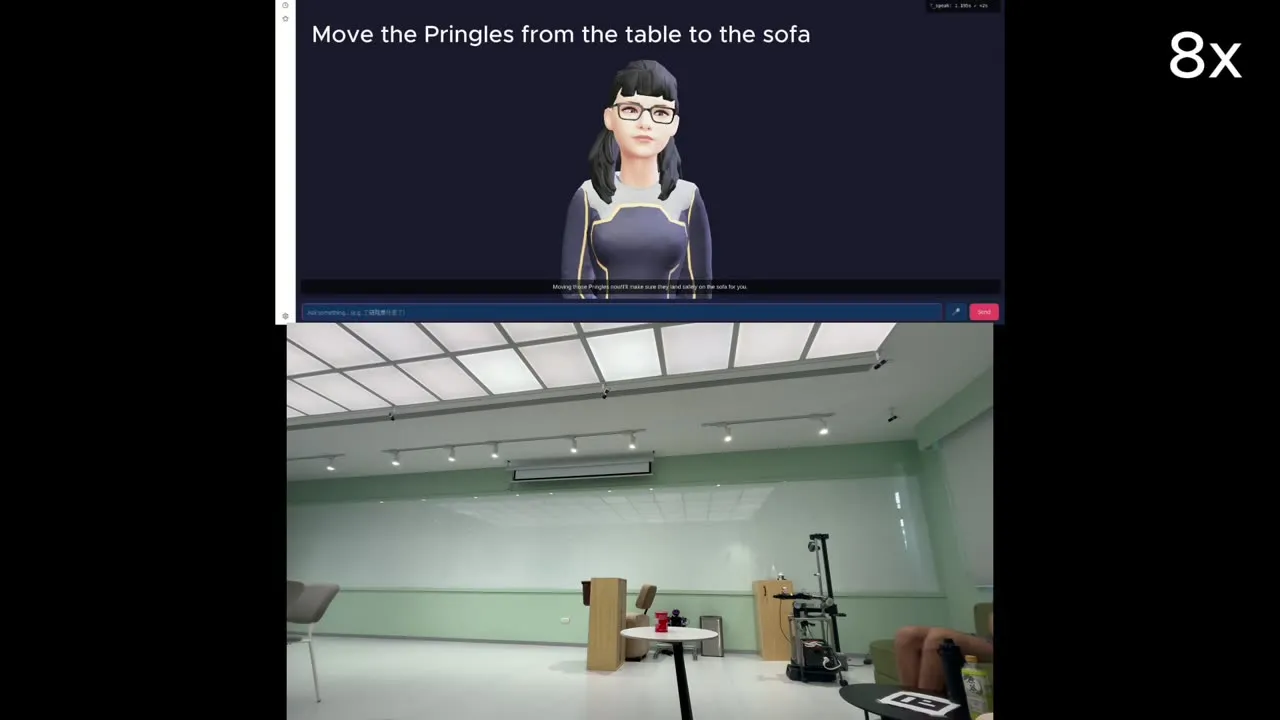
Built a real-time digital guide for ITRI’s museum: a web-based conversational avatar that answers visitors’ questions by voice, in English or Chinese, from a RAG knowledge base, and adapts its tone to who it sees on the webcam. The LLM, retrieval, speech recognition, vision and TTS all run on one Jetson AGX Thor.
Served Gemma4-26B-A4B, a mixture-of-experts LLM in NVFP4, with vLLM at about 38 tokens/s (about 4B parameters active per token), alongside the other models in 128 GB of unified memory. Benchmarked it against Qwen3-30B-A3B.
Kept it real time even though it runs in the browser: streaming the answer sentence by sentence into TTS, with every stage profiled, brought the first spoken word to about 1.5 s after the question.
Added Mandarin lip-sync to the open-source TalkingHead engine (by Mika Suominen): server-side hanzi → pinyin → viseme conversion with per-character timing.
Connected the avatar to a ROS 2 robot: spoken requests become robot commands, and when several objects match, the avatar shows the robot’s map of candidates and the user picks one by voice.
Started from a first generation that rendered a lip-synced video of a presenter on the server (MuseTalk or Wav2Lip, emotional TTS, 25 FPS over multi-session WebRTC). Moving the face to a 3D avatar rendered in the browser freed the GPU for the LLM and made the single-board version possible.
Computer vision and multimodal systems for real-time use, from cameras on the edge to robots.
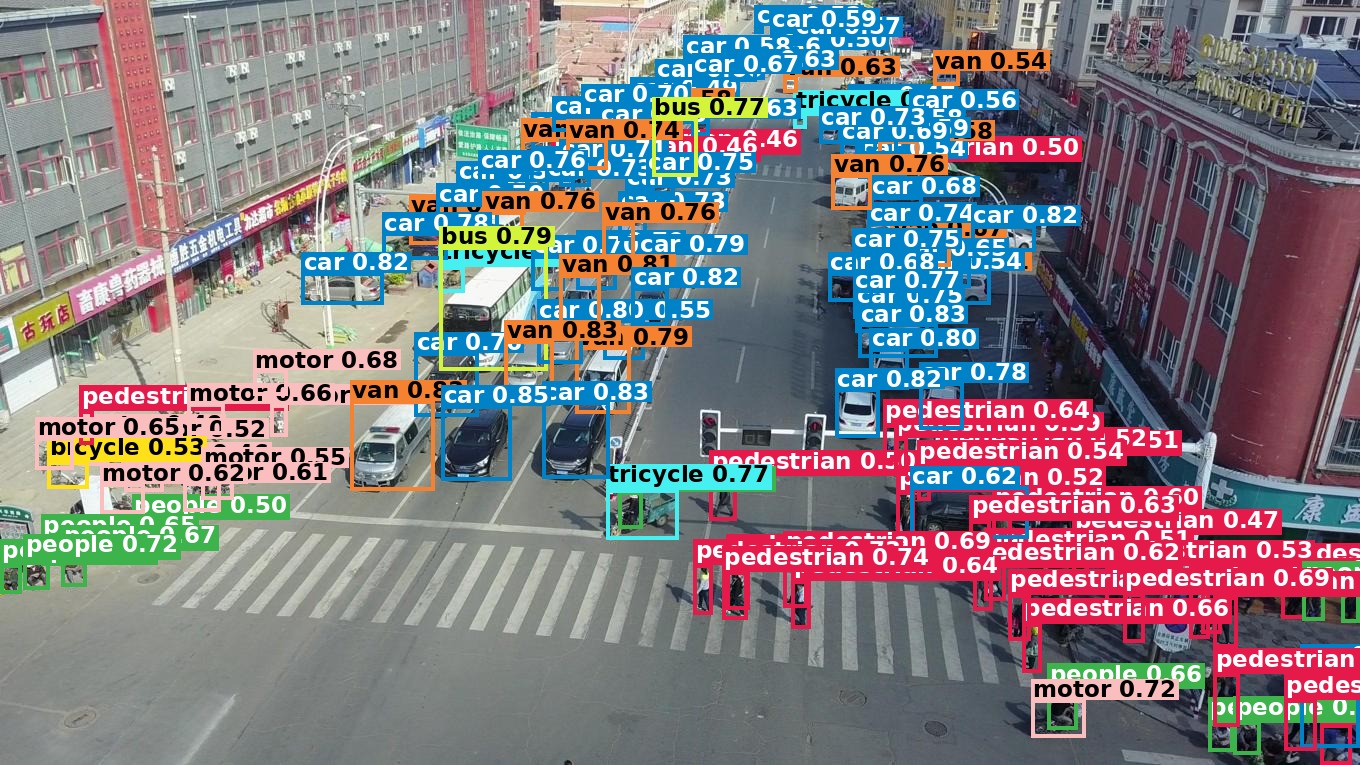
Built a people counting and attribute analysis system: a modular pipeline of object detection, multi-object tracking and attribute recognition, with lightweight multitask CNNs for gender, age group and clothing color.
Took part in the NTIRE 2026 Mobile Real-World Image Super-Resolution challenge with the lab’s team: ×4 upscaling of photos with unknown real-world degradations, using models that have to run on a phone. Co-author of the challenge report.
Worked on the lab’s conversational avatar with ITRI and on giving a ROS 2 robot LLM voice commands.
A real-time bilingual (English and Chinese) conversational avatar that guides visitors through ITRI’s museum, in two
generations: first a server-rendered
lip-sync video avatar (MuseTalk, Wav2Lip) streamed over WebRTC, then a 3D avatar rendered in the browser with the
LLM, RAG, speech and vision models all on one Jetson AGX Thor. The second version serves a 26B mixture-of-experts LLM
(NVFP4) at about 38 tokens/s and starts speaking about 1.5 s after the question. It can also control a ROS 2 robot by
voice.
An ensemble of ten detectors, each tuned to one zoom level (tiles upsampled ×2 to ×5), fused with Weighted Boxes
Fusion and a learned box refiner. It reaches 0.4725 val mAP50:95 against 0.4253 for the best single detector, and
placed first of 112 students on the class Kaggle competition’s public leaderboard and second on the private one.
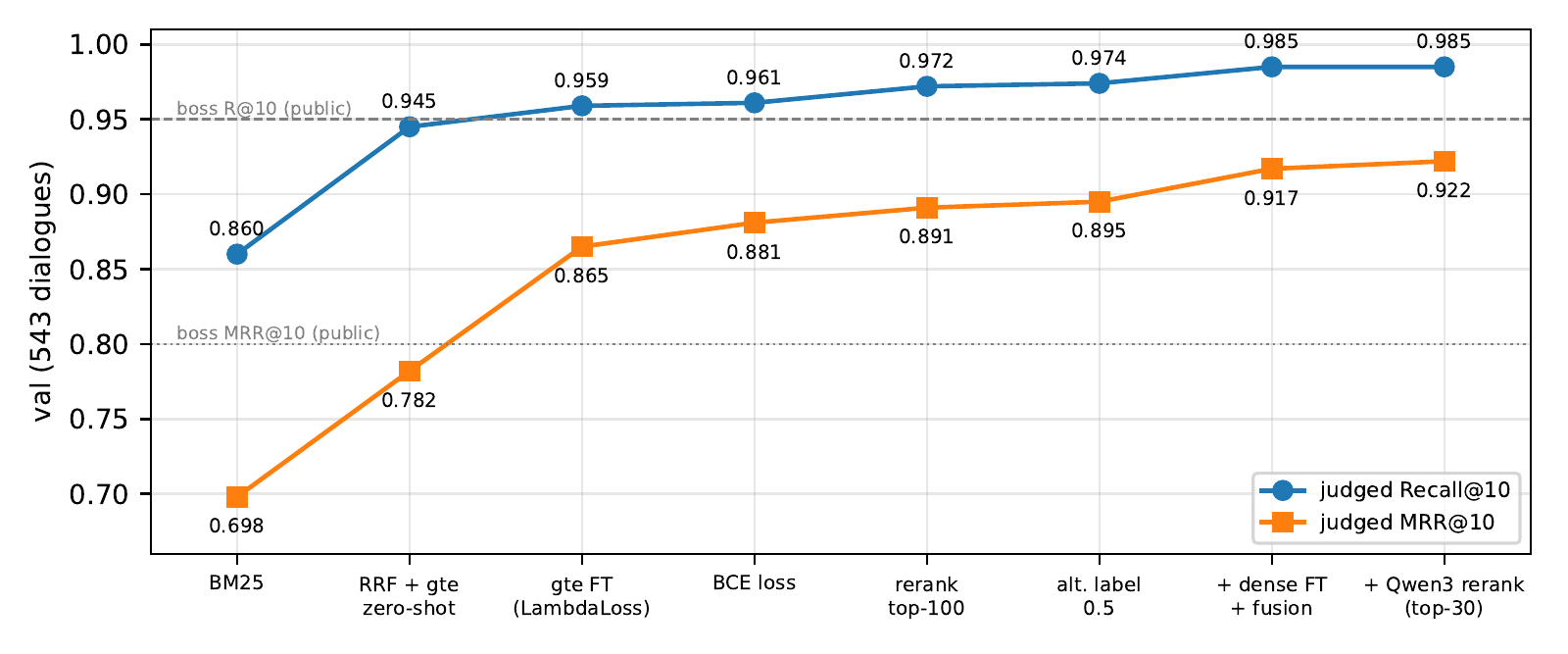
A three-stage retrieve-and-rerank pipeline (a fine-tuned dense retriever fused with BM25, then two fine-tuned
rerankers) that finds the product a customer describes among 75,000 to 100,000. Trained on hard negatives labelled by
the course’s LLM judge, it reaches judged MRR@10 0.911 on the public set, against 0.689 for BM25.
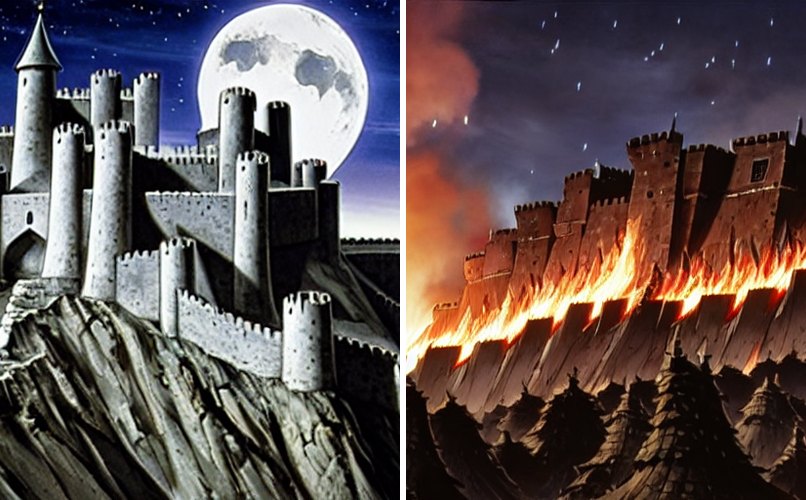
DDIM sampling on top of a trained diffusion model cuts 1,000 steps to 50 at FID 12.6 (8.7 with all 1,000), across 20
combinations of step count and stochasticity. LoRA then fine-tunes Stable Diffusion v1.4 for an artistic style, and
DreamBooth with LoRA for a character’s identity, from a few dozen captioned images.
Customer intent in Chinese and English sales conversations
Applied Deep Learning, NTU
PyTorch, Hugging Face Transformers, XLM-RoBERTa
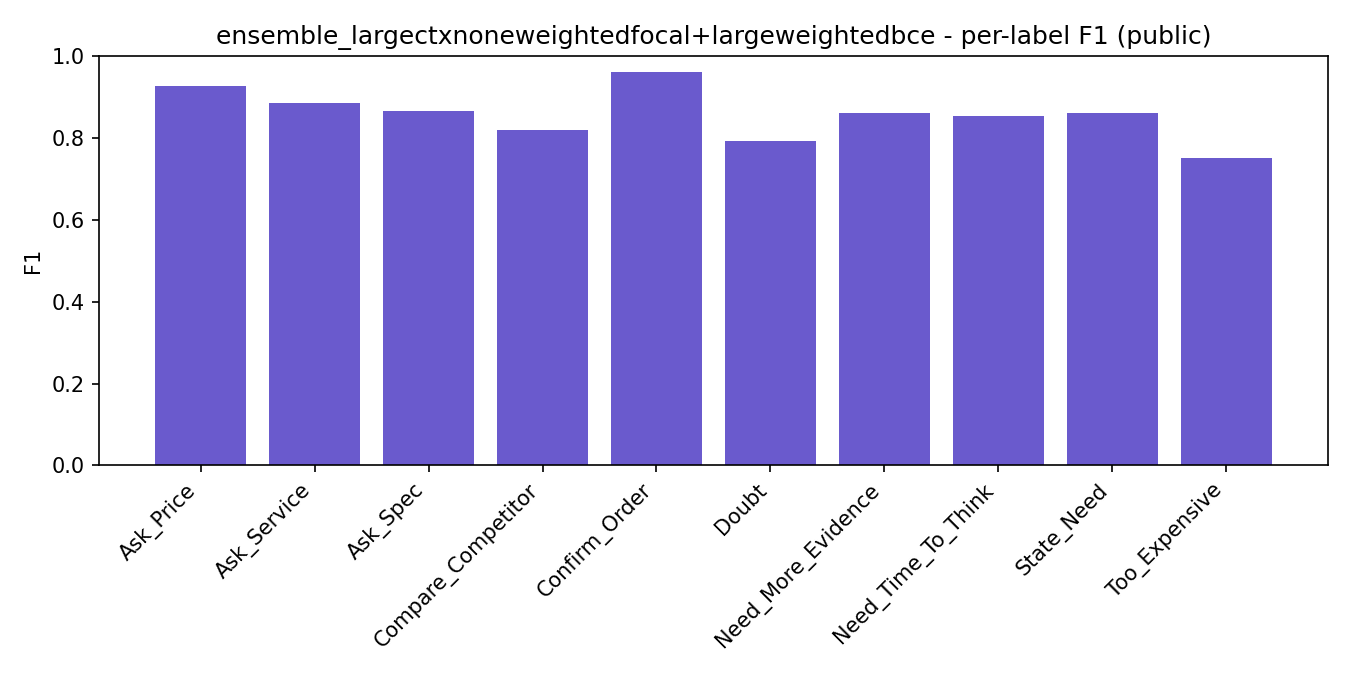
Multi-label classification of ten customer intents with fine-tuned multilingual encoders, compared over 23
configurations with three seeds per key setting. An ensemble of two XLM-RoBERTa-large models reaches public Macro-F1
0.857; model size and a class-weighted loss mattered most, and the dialogue context did not help.
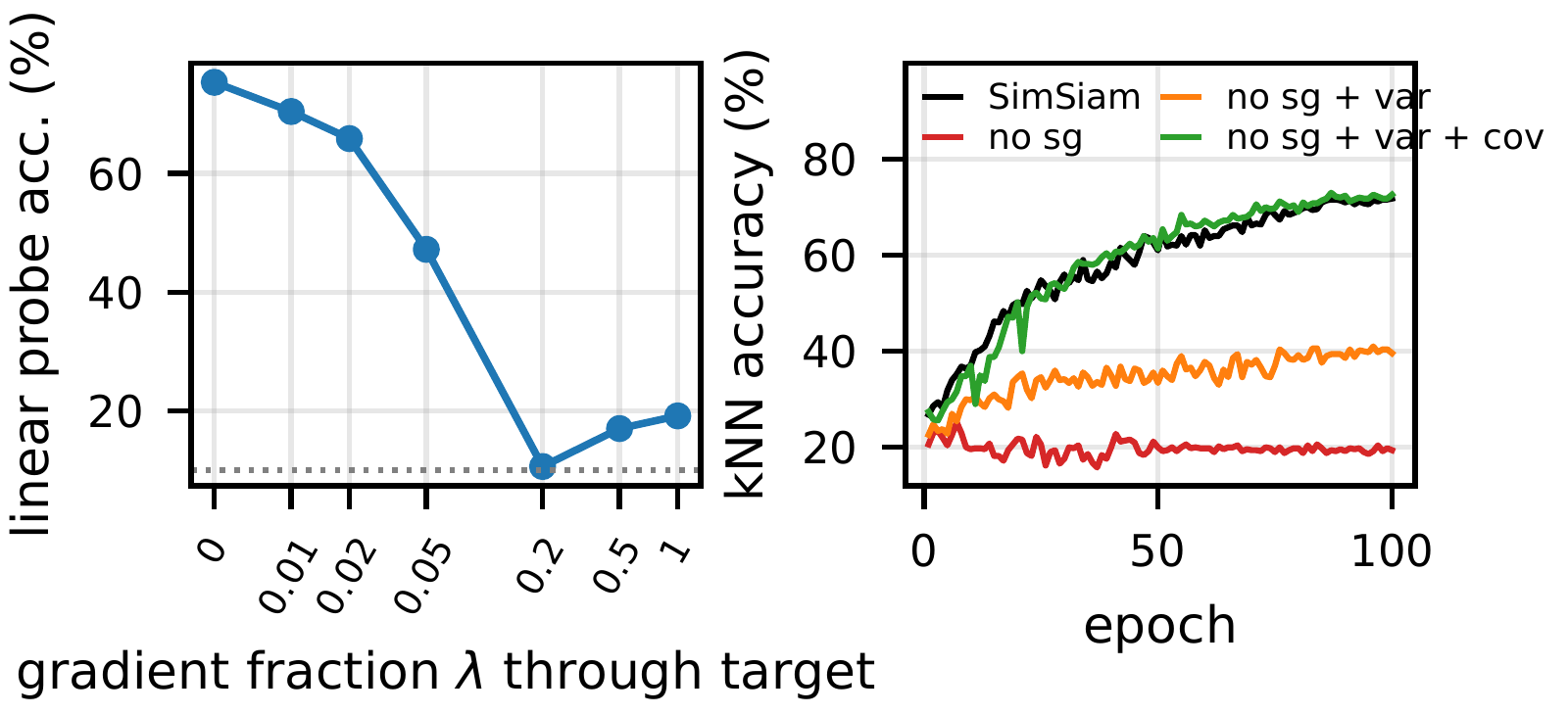
A re-implementation of SimSiam self-supervised learning: a linear probe reaches 75.4% on STL-10 with 1,000 labels,
against 48.9% from scratch. Beyond the paper, I show that stop-gradient cannot be relaxed (a 1% leak costs 5 points)
but can be replaced by variance and covariance terms (75.8% with no stop-gradient).
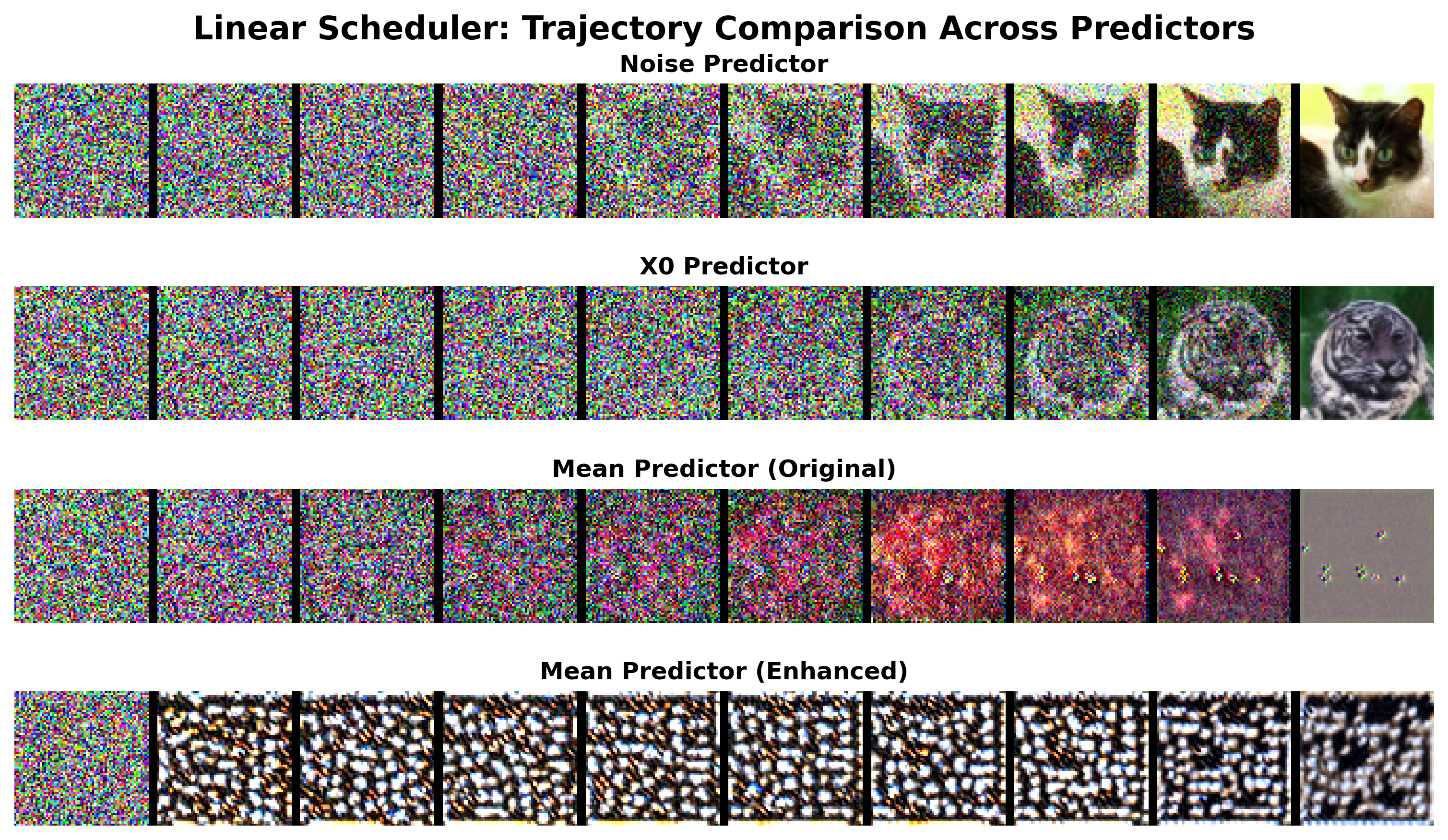
DDPM implemented from scratch on 2D data and AFHQ animal faces, comparing three noise schedules (linear, quadratic,
cosine) and three things the network can predict. Predicting the clean image gave the best FID with every schedule
(1.20 at best), although not the most natural faces, and fixing the cosine schedule’s clipping took it from FID 74.6
to 13.9.
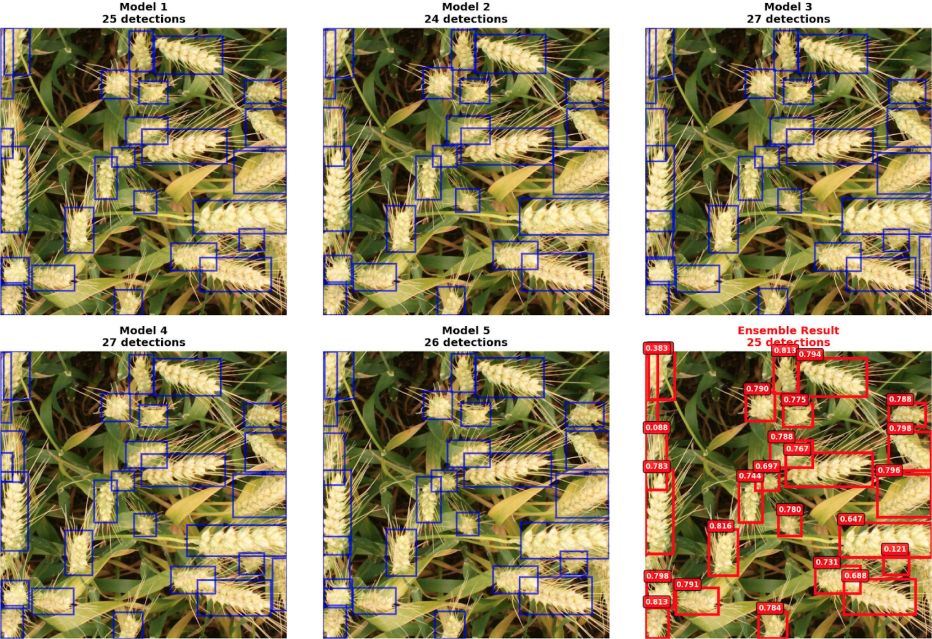
Final project on the Global Wheat Detection challenge: five YOLOv11x models trained with 5-fold cross-validation
label the unlabeled images through a test-time-augmented WBF ensemble, and a model retrained on those pseudo-labels
gives the submission. It scores 0.7691 on the public test set and 0.6873 on the private one.
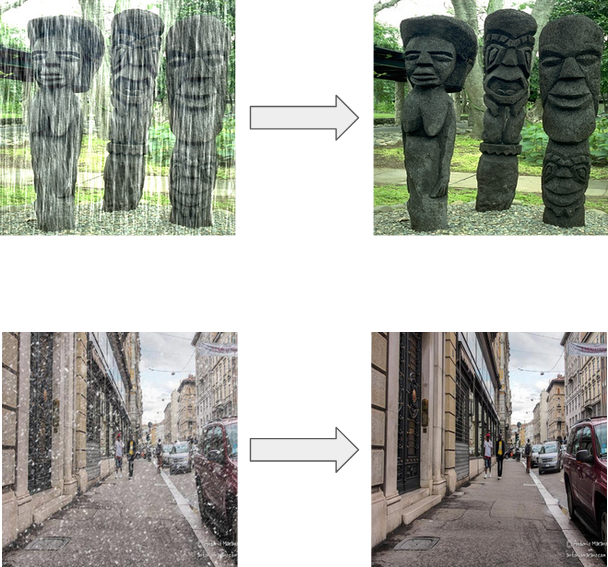
PromptIR-V4, a U-Net with Transformer blocks and a dynamic spatial prompting mechanism that adapts the features to the
kind of degradation, so a single model removes both rain and snow. It reaches 30.26 dB PSNR on validation.
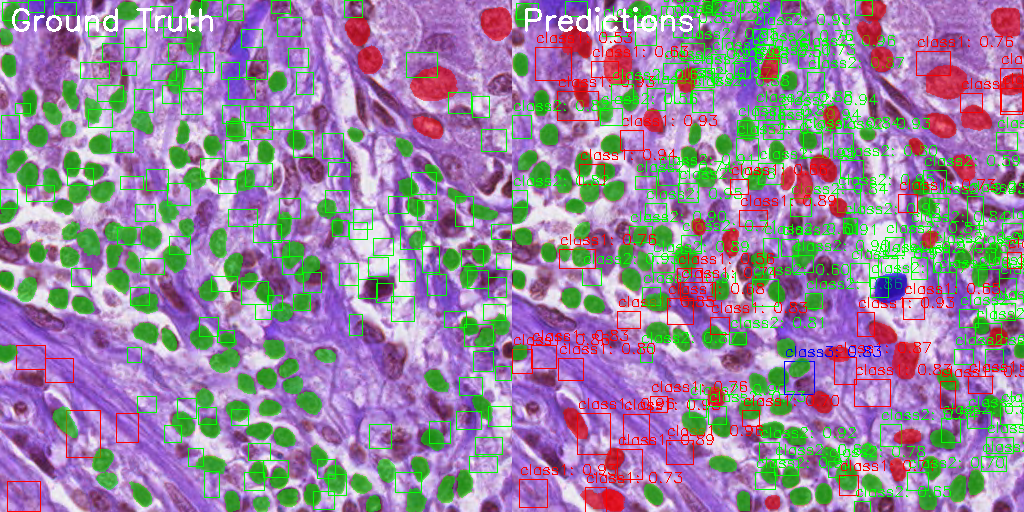
A Cascade Mask R-CNN with a ResNet-101 backbone, tiling for large images and test-time augmentation segments four
types of cells, which often overlap and have diffuse boundaries. It reaches 0.490 AP, against 0.340 for a Mask R-CNN
baseline.
Digit detection and number recognition in street-view images
Visual Recognition using Deep Learning, NYCU
PyTorch, Faster R-CNN, ResNet-50-FPN v2
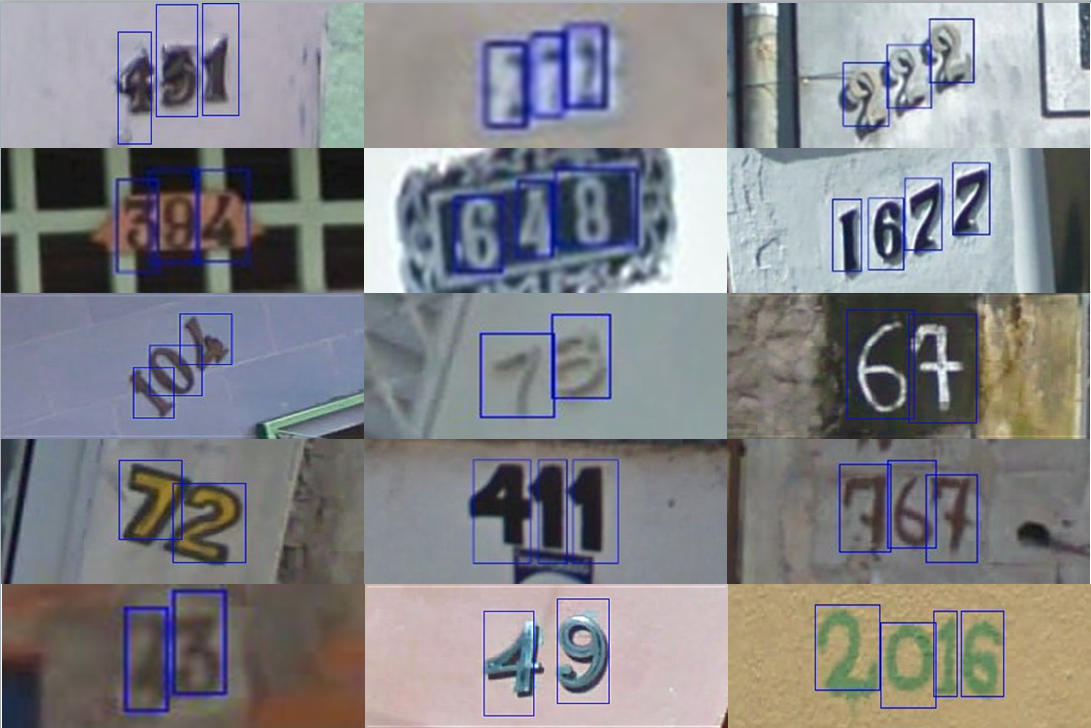
A Faster R-CNN detects each digit in Street View House Numbers images, and post-processing reads the whole number
from the boxes. It reaches 0.382 mAP for detection and 0.845 accuracy for whole numbers, above the course baselines of
0.35 and 0.70.
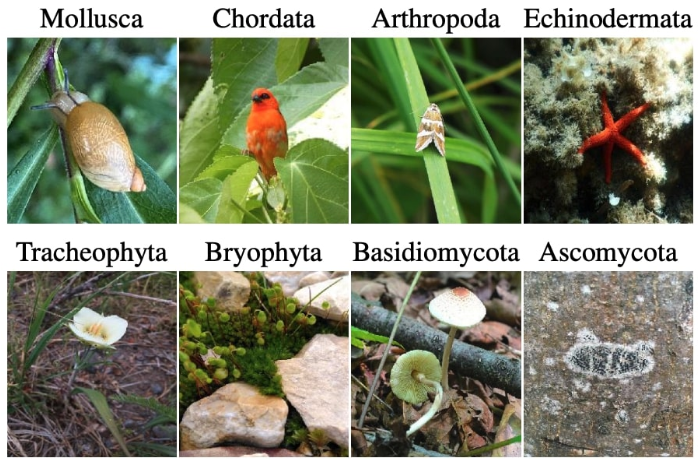
A ResNeXt-101 with squeeze-and-excitation channel attention, CutMix, focal loss with label smoothing and test-time
augmentation classifies images of organisms into 100 classes with 89.1M parameters, under the 100M limit. It reaches
92.3% accuracy on validation and 96% on the public test set.
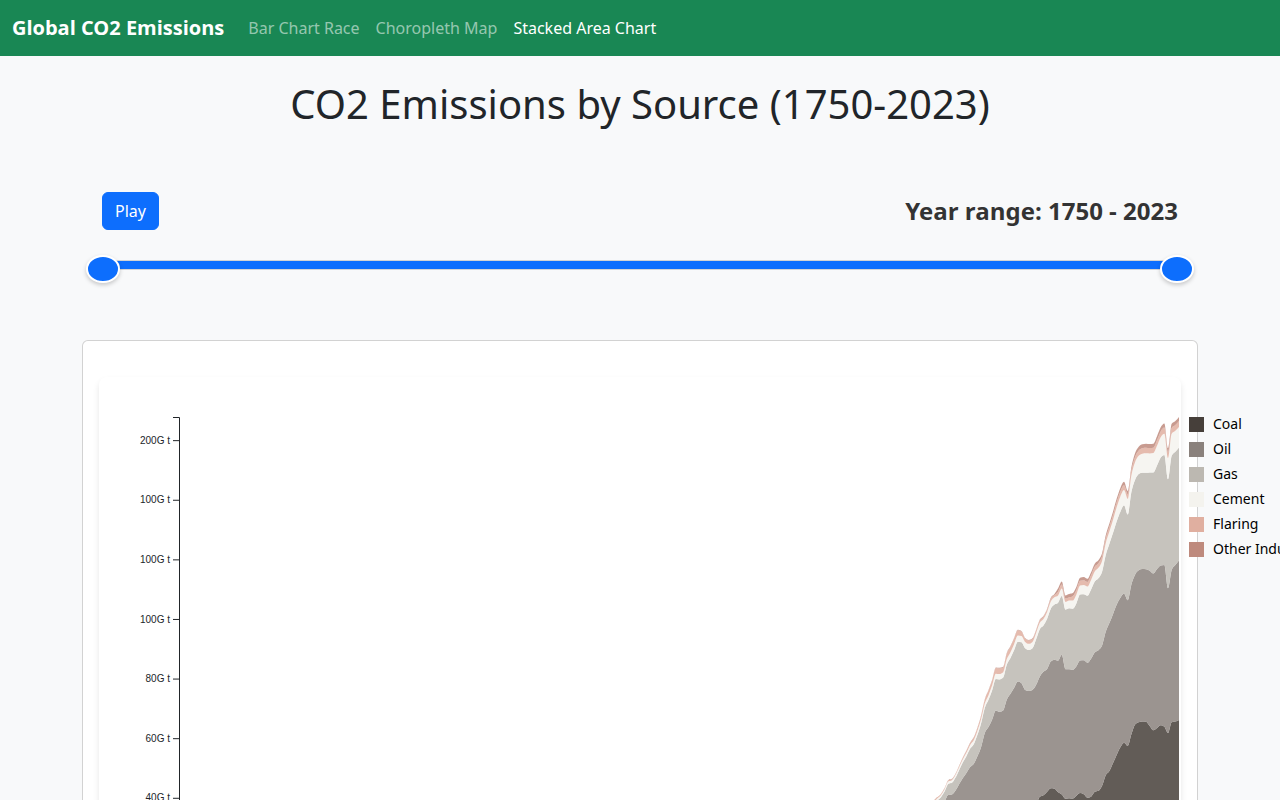
A D3.js system for exploring Our World in Data’s CO₂ emissions since 1750: a bar chart race of total and per-capita
emissions by country, a choropleth map of emissions against GDP, and a stacked area chart by source (coal, oil, gas,
cement, flaring). The course’s eight homeworks, from scatter plots to Sankey diagrams, are in the same repository.
Spanish (native), English (advanced, TOEIC 955), Chinese (TOCFL level 3, B1)
How it works
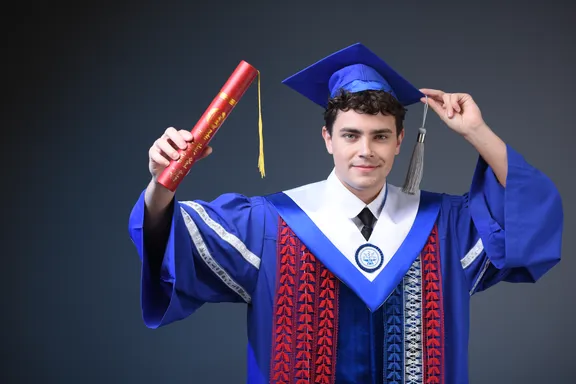
The photo and the “Inside the model” panel come from one offline run of Qwen3-VL-8B-Instruct on this photo, resized to 576×384 pixels. The vision encoder cuts the image into 864 patches of 16×16 pixels and merges each 2×2 group into one visual token: 216 tokens in an 18×12 grid, which is the step the photo shows as you scroll.
Pruning keeps the 54 tokens (25%, an illustrative ratio) that the last prompt token attends to most in the 3rd of 36 layers (layer 2, 0-indexed, as in FastV). The prompt is “What is Jorge working on now?” The few kept corner and edge tokens are attention sinks, a known behavior of FastV-style ranking.
I wrote the sentence. Qwen reads it one token at a time (teacher forcing), with the pruned visual tokens and the KV cache eviction described below, and the table gives, for each token, the probability Qwen assigned to it, its rank among all tokens, and Qwen’s own top 3 predictions at that step.
The KV cache keeps 64 entries with heavy-hitter eviction (H2O-style, recent window 8) decided from Qwen’s attention while it reads the sentence; faded tiles in the strip are the 12 visual tokens it evicted. Sizes are the exact bf16 key/value bytes: 10.9 MiB against 35.3 MiB with no pruning and no eviction, for this sentence only. None of this is a benchmark. Once the photo is pruned, the panel replays that pass one token at a time from the recorded run (nothing runs in your browser): the bar shows the cache after each token, and the dense size grows while the pruned cache stays at 64 entries.
Left to answer “What is Jorge working on now?” on its own, with the same model, input and settings and greedy decoding, Qwen wrote this (184 tokens, unedited; its Markdown bold is dropped). Point at, focus or tap a word to see which parts of the photo Qwen attended to while writing it.
Theimagecapturesamomentofachievement, notanongoingtask. So, Jorgeisnotworkingonadegree; hehasjustfinishedone.
Lit: the 8 of 216 visual tokens with the most attention from the position that wrote the word (for a word of several tokens, their average), averaged over heads and over layers 16–28, and divided by that position’s average attention over the whole answer, since raw attention goes mostly to a few “sink” tokens whatever the word. Read from one forward pass over Qwen’s own answer: at 176 of the 183 tokens of its text (the 184 above include the end-of-turn token) the pass reproduces Qwen’s first choice. Some words map cleanly (man, diploma, stole, expression), others do not; nothing here is filtered.